


When it comes to pallet wrapping, not all loads behave the same. While solid, boxed products remain stable on a turntable pallet wrapper, liquid-filled drums or containers behave differently. The movement of liquid inside a drum creates unpredictable dynamic forces that can damage both the wrapping machine and the load itself. This article explains why turntable pallet wrappers are not ideal for liquid loads and how these forces affect key mechanical components.
Why Turntable Wrappers Are Not Ideal for Liquid Loads
Turntable pallet wrappers are designed for stable, solid loads that rotate as a single unit. When used to wrap liquid-filled drums or IBCs, the liquid inside behaves independently of the container walls. During acceleration and deceleration, the liquid moves in the opposite direction to the turntable, producing inertia and centrifugal forces that stress both the load and the machine.
As the turntable starts, stops, and changes speed, the liquid lags behind and surges forward, a motion known as sloshing. This sloshing causes the load’s centre of gravity to shift constantly, resulting in vibration, imbalance, and wear across the entire drive system. Over time, this leads to costly maintenance, reduced accuracy, and shortened machine lifespan.
How Liquid Loads Affect the Moving Parts of a Turntable Pallet Wrapper
1. Turntable
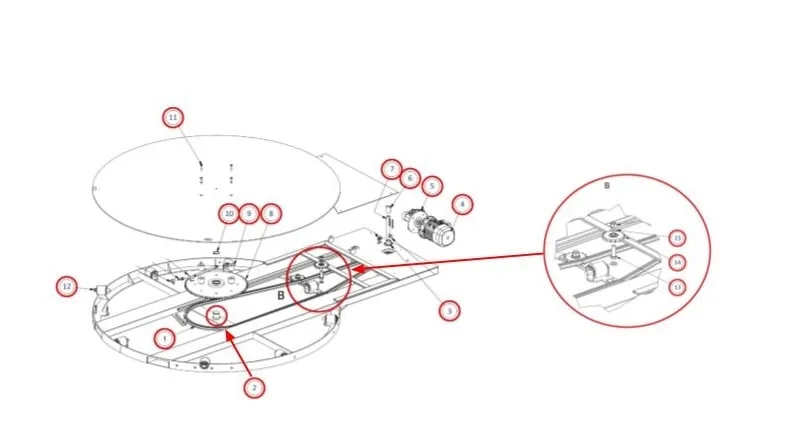
The turntable supports and rotates the pallet load. When wrapping liquids, shifting weight distribution places uneven pressure on the turntable surface. Instead of a balanced downward load, the table experiences lateral and torsional forces as the liquid moves, causing vibration and flexing. Over time, this can lead to distortion and uneven wear on the platform.
2. Casters or Turntable Rollers
Casters or rollers beneath the turntable support its weight and movement. Liquid loads shift the centre of gravity throughout rotation, causing point loading where some rollers bear more pressure than others. This uneven stress leads to bearing fatigue, pitting, or flat spots on the rollers, resulting in a rougher, noisier operation.
3. Drive Chain
The drive chain transfers torque from the motor to the turntable. Sloshing liquids create sudden resistance changes that produce jerking forces and tension spikes. The chain stretches unevenly, sprocket teeth wear prematurely, and excessive vibration may cause the chain to skip or whip under load.
4. Drive Shaft
The drive shaft connects the motor and gearbox to the turntable hub. Liquid movement causes bending and torsional vibration, which lead to metal fatigue and potential misalignment of couplings or bearings. This can produce shaft wear and an increase in vibration across the machine structure.
5. Gearbox
The gearbox converts motor speed into rotational torque. Liquid loads cause fluctuating back pressure during acceleration and braking, shock-loading the gears and wearing them prematurely. This can lead to overheating, degraded bearings, and oil seal failures, all of which shorten gearbox life.
6. Motor
The motor powers the rotation system. With liquid loads, torque demand varies constantly, forcing the motor to work harder to maintain speed. The result is current spikes, overheating, and reduced efficiency, which in turn shorten motor lifespan and increase failure risk under heavy use.
Summary: Why It Matters
Under normal operation, all these components work smoothly with predictable resistance. But when wrapping liquids, the constant shifts in inertia create small but continuous shocks through the drive system. This results in premature wear of bearings, shafts, and gear teeth — increasing maintenance costs, downtime, and the total cost of ownership.
A Better Alternative: Rotary Arm Wrappers
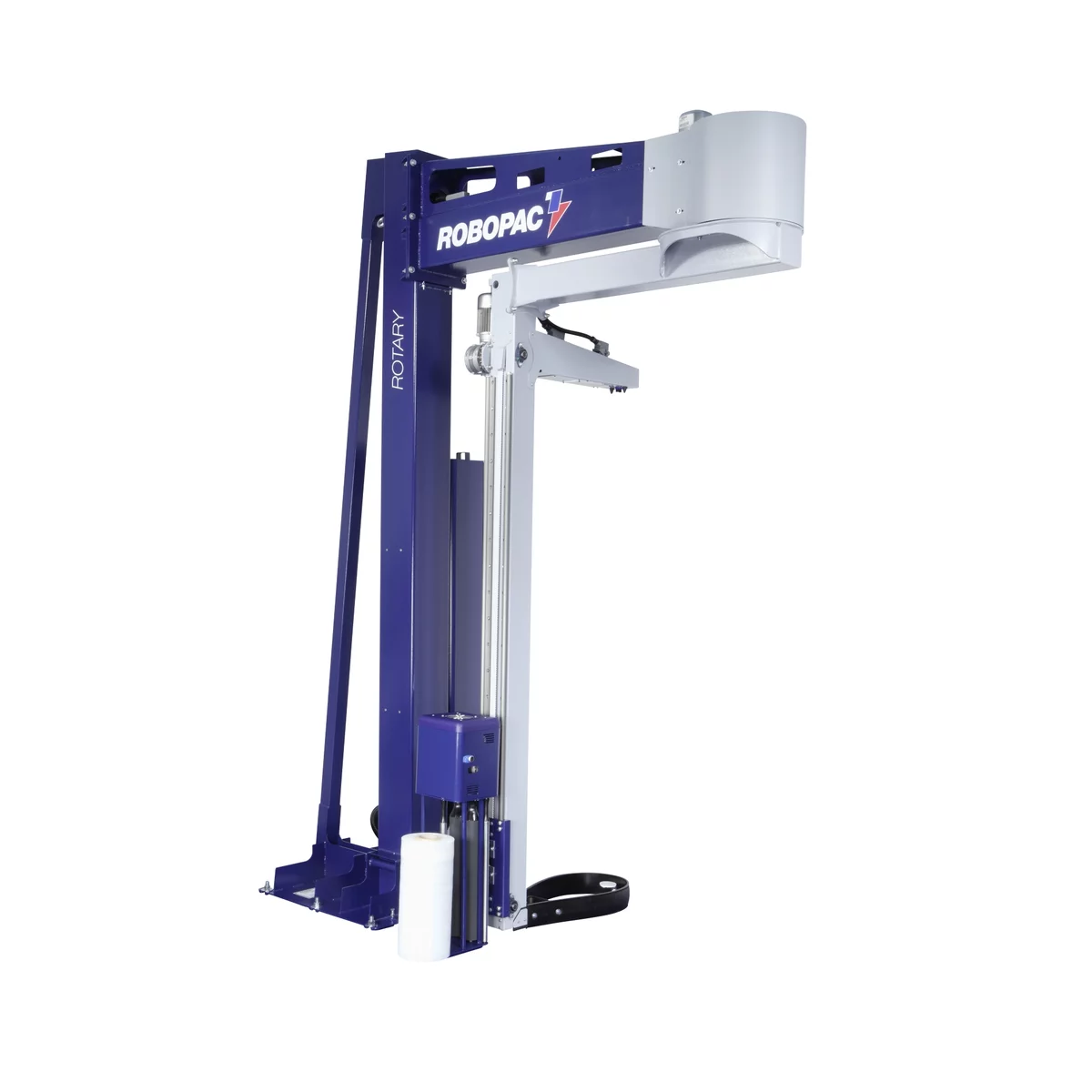
To avoid these mechanical stresses, operations that handle liquid or semi-liquid products should use a rotary arm (over-arm) or straddle-type pallet wrapper. In these systems, the load stays completely static while the film carriage rotates around it. This eliminates sloshing forces, reducing vibration, mechanical wear, and downtime while improving wrapping consistency and safety.
The Key Takeaway
Turntable pallet wrappers are excellent for solid, balanced loads — but for liquid drums and tanks, they can introduce damaging rotational stresses. The smarter choice for these applications is a rotary arm or straddle wrapper, which keeps the load stationary and allows the film carriage to move instead. This approach protects your machine, your product, and your profits.
For advice on the best pallet wrapping system for your products, speak to us.